


Saadani National Park

Overview
Where the Wild Meets the Waves
Welcome to Saadani National Park, a rare gem where Tanzania’s wild savannah meets the turquoise waters of the Indian Ocean. This is the only park in East Africa where you can spot wildlife just steps away from the beach—and even take a dip after a game drive. Officially established as a national park in 2005, Saadani covers 1,100 square kilometers and protects an incredible mix of marine and terrestrial ecosystems. Its name dates back to 19th-century Arab settlements and has roots deep in Tanzanian trade history, even appearing in chronicles of explorers like Ptolemy and Richard Burton. Today, Saadani offers a one-of-a-kind destination that blends adventure, history, and coastal beauty.
Park Attractions
Saadani’s diverse attractions cater to nature lovers, wildlife enthusiasts, and cultural explorers alike.
- Wildlife Safari: Spot iconic African animals including elephants, lions, giraffes, buffaloes, hartebeests, reedbucks, waterbucks, bushbucks, warthogs, and yellow baboons. Wildlife roams freely, offering a truly immersive safari experience.
- Wami River & Estuary: This is one of the few places in East Africa where large wildlife thrives in estuarine habitats. It’s a haven for hippos, crocodiles, and a wide array of bird species such as sandpipers, Eurasian oystercatchers, and greenshanks. Mangrove forests lining the river also host bats, monkeys, and reptiles.
- Mafui Sandbank: A stunning marine extension of the park, ideal for snorkeling, diving, and picnics. Visitors often spot dolphins and humpback whales, especially in the migration season.
- Madete Beach (Green Turtle Nesting Site): A key breeding site for green turtles, particularly active from July to November, with another smaller peak in January to March. Visitors can learn about turtle conservation and, with luck, witness hatchlings emerging from the sand.
- Zaraninge Forest: This rare, lowland evergreen forest shelters endangered and endemic plant and animal species, including seasonal elephant populations.
- Pangani Town: Just 40 km from the park, this historical Swahili-Arab coastal town offers a glimpse into Tanzania’s past, from the slave trade to colonial heritage. Today, Pangani is a serene beach destination with coconut groves and historical architecture.
When to Visit
Saadani National Park is a year-round destination, but the dry season from June to October offers the best wildlife viewing and most accessible roads. February and July are especially dry, with peak temperatures around 29°C. Rainfall is bimodal—long rains from March to June and short rains from October to December—adding lush green beauty for birdwatchers and photographers.
Excursion and Activities in Saadani National Park
- Game Drives: Conducted daily between 06:30 and 18:30, ideal for spotting wildlife across the open plains.
- Guided Bush Walks (1–3 hours): Available in the cool hours of morning (06:30–10:00) or late afternoon (15:30–18:30). Booking in advance is recommended.
- Wami River Cruise: A peaceful 2-hour ride through the estuary, perfect for seeing hippos, crocs, birds, and lush mangroves.
- Beach Relaxation: Enjoy serene moments on the untouched shores of the Indian Ocean.
- Snorkeling & Diving at Mafui Sandbank: Explore vibrant coral reefs and marine life (note: bring your own snorkeling gear)
Getting there
By Air:
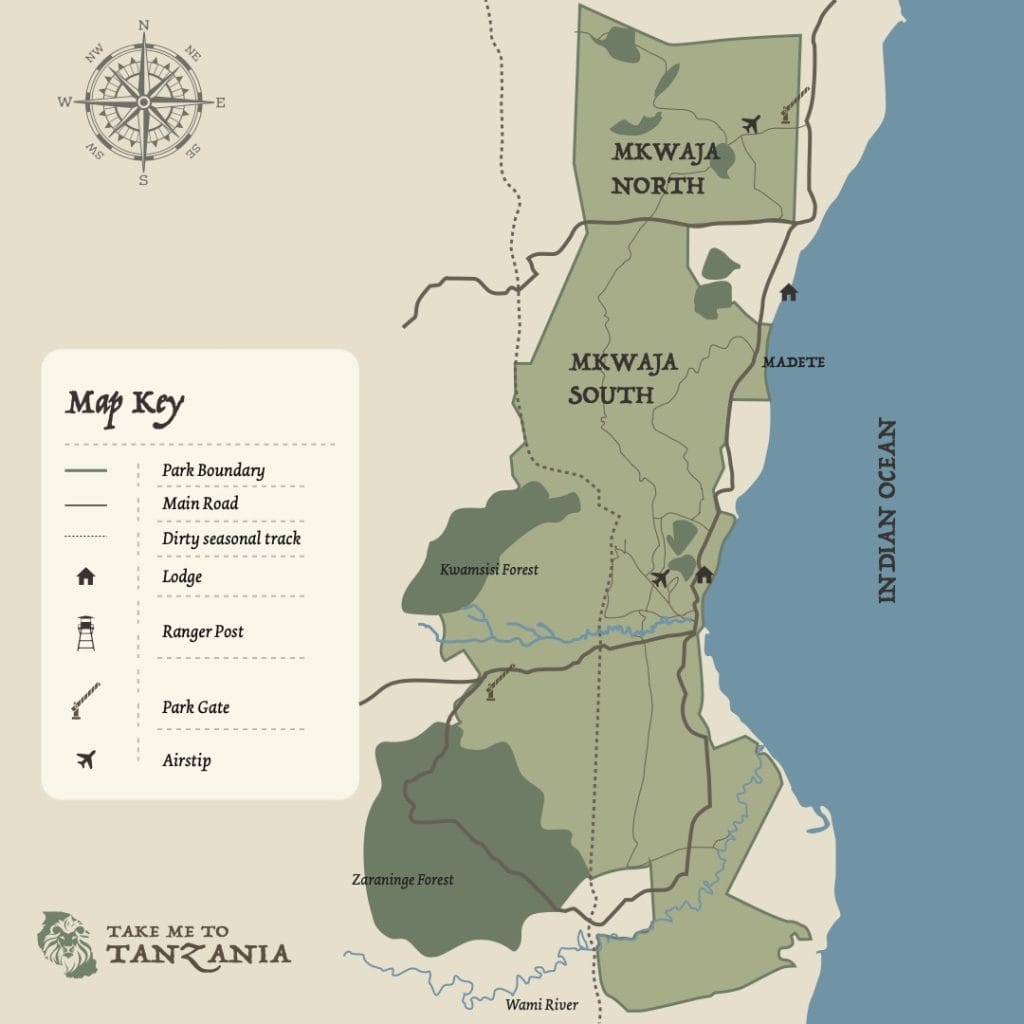
Charter flights are available from Dar es Salaam, Zanzibar, Tanga, Arusha, and other major towns. Land at Saadani Airstrip (South) or Mkwaja Airstrip (North) year-round.
By Road:
From Dar es Salaam: 131 km via Bagamoyo to Gama Entrance.
From Tanga: 146 km via Pangani to Madete Entrance.
Alternative Dar es Salaam Route: 225 km via Chalinze and Miono to Mvave Entrance.
From Arusha/Morogoro: Off the Arusha–Dar es Salaam highway, 79 km from Mkata Junction to Madete Gate.
OTHER DESTINATIONS
Serengeti National Park
Learn MorePrison Island
Learn MoreNgorongoro Conservation Area Authority
Learn MoreStone Town
Learn MoreMikumi National Park
Learn MoreChumbe Island Coral Park
Learn MoreMnemba Island
Learn MoreArusha City
Learn MoreDar es Salaam City
Learn MoreMount Longido
Learn More
