


Katavi National Park

Overview
Tanzania’s Hidden Wild Frontier
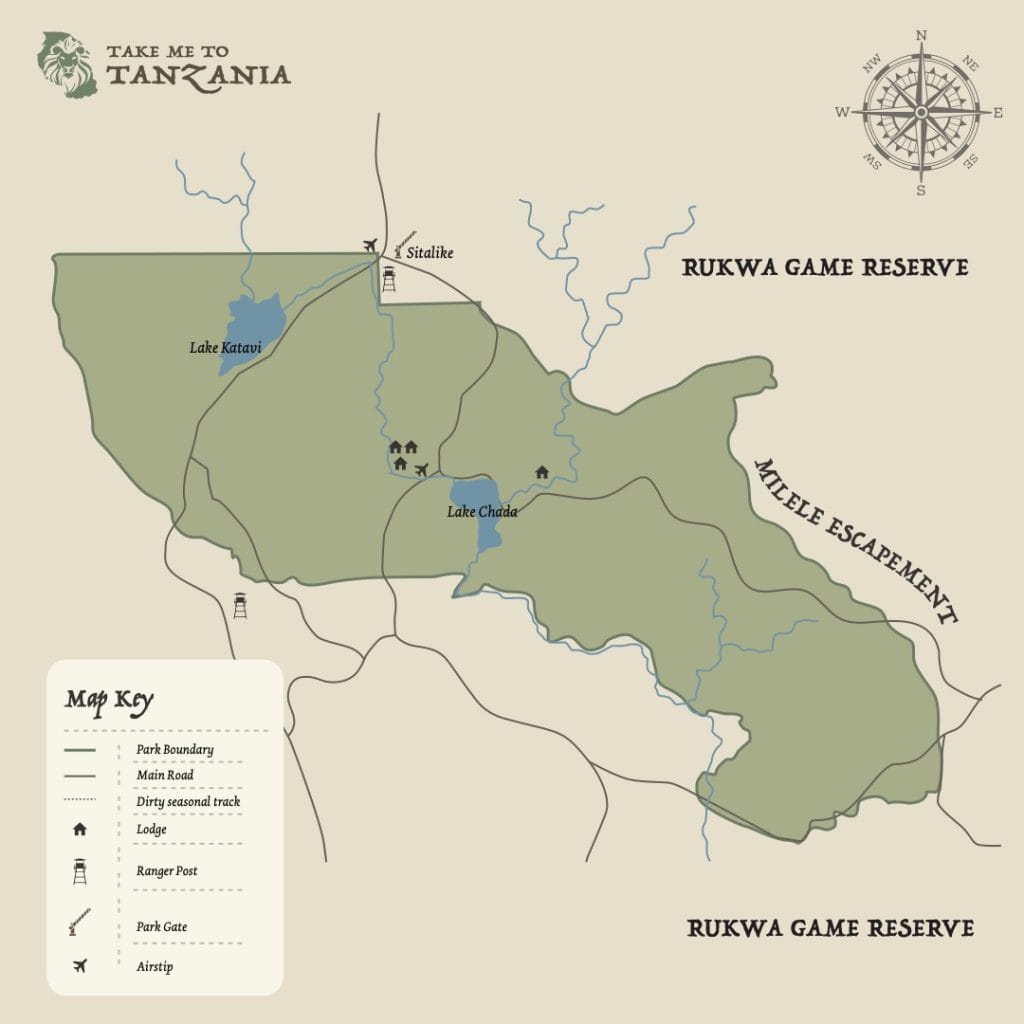
Katavi National Park, located in the remote western region of Tanzania, is a true gem for safari enthusiasts looking to escape the crowds. Originally a game reserve, Katavi was established as a national park in 1974 and later expanded in 1997 to cover 4,471 km², making it Tanzania’s third-largest national park after Ruaha and Serengeti.
Set about 40 km south of Mpanda town, Katavi offers a raw, untamed wilderness experience unlike anywhere else. The park has a tropical climate, with an average temperature of 24.6°C and annual rainfall of about 1,139 mm. October is the hottest month, while June is the driest, with virtually 0 mm of rain.
Park Attractions
Katavi is one of the last true African wildernesses, where wide-open spaces meet incredible biodiversity. It’s home to dramatic floodplains, seasonal lakes, and dense woodlands, teeming with life.
- Wildlife Viewing: - Katavi is known for its huge concentrations of wildlife. Herds of elephants, buffalos, giraffes, and hippos dominate the floodplains, while lions, leopards, and other predators lurk in the grasslands.
- Birdlife: - Birdwatchers will be thrilled with Katavi’s 450+ bird species, from large ground hornbills to vibrant sunbirds and raptors. The park is a paradise for avian diversity.
- Waterfalls & Scenery: - The park also features scenic hiking trails leading to stunning waterfalls like Chorangwa, Lukima, and Ndido—perfect for photography and a peaceful escape.
When to Visit
The best time to visit Katavi is during the dry season (June to October). As water sources shrink, animals congregate around the remaining pools, offering unbeatable game viewing. The green season (November to May) transforms the landscape into lush wetlands, ideal for birdwatching and scenery, though wildlife may be more dispersed.
Excursion and Activities in Ruaha National Park
Katavi offers a wide range of activities for those seeking both adventure and tranquility in nature.
- Game Drives: - Explore the park from 6:30 AM to 6:30 PM in a 4x4 safari vehicle. No additional fees apply. Spot elephants, lions, crocodiles, and hippos in their natural habitat.
- Night Game Drives: - Get a glimpse of Katavi after dark using spotlights to observe nocturnal animals such as civets, porcupines, and predators on the move.
- Walking Safaris: - Short Walking Safari (Sitalike Trail): 1–9 km, around 3 hours and Long Walking Safari (Chorangwa Trail): Over 10 km and more than 5 hours of immersive exploration.
- Hiking to Waterfalls: - Trek 17 km through rugged terrain to elevated viewpoints overlooking Chorangwa, Lukima, and Ndido Waterfalls. A rewarding adventure for nature lovers.
- Birdwatching: - With over 450 species, Katavi is a birding hotspot year-round. Bring your binoculars and discover everything from massive ground hornbills to delicate sunbirds.
- Camping: - Public Campsites: Equipped with toilets, showers, dining areas, and water, Special Campsites: Remote, no facilities—pre-booking required for a wild, private experience and Fly Camping: A mobile, ultra-private camping setup ideal for explorers seeking full immersion in the bush.
- Bush Meals & Picnicking: - Enjoy meals in the heart of the wilderness—whether after a game drive, hike, or as part of a special occasion.
- Filming: - Katavi offers exceptional settings for documentaries and photography. A $250/day filming fee includes conservation and camping permits.
Getting there
Getting to Katavi is an adventure in itself, with multiple transport options available.
By Air: - Charter flights are available from Dar es Salaam, Arusha, or Mwanza to:
- Mpanda Airport (in Mpanda town)
- Sitalike and Ikuu Airstrips (inside the park)
Air services are typically available on Mondays and Thursdays via Zantas Air, Safari Air Link, Coastal Aviation, and others.
By Road: - Road travel is long but scenic, passing through rural Tanzania and offering an authentic travel experience
- From Dar es Salaam via Mbeya – approx. 1,513 km
- From Dar es Salaam via Tabora – approx. 1,392 km
- From Arusha via Tabora – approx. 1,015 km
- From Mwanza via Inyonga – approx. 741 km
By Rail: - Take the train from Dar es Salaam to Tabora, then transfer to Mpanda, followed by local transport to Sitalike, the park’s main access point.
OTHER DESTINATIONS
Serengeti National Park
Learn MorePrison Island
Learn MoreNgorongoro Conservation Area Authority
Learn MoreStone Town
Learn MoreMikumi National Park
Learn MoreChumbe Island Coral Park
Learn MoreMnemba Island
Learn MoreArusha City
Learn MoreDar es Salaam City
Learn MoreMount Longido
Learn More
