


Mahale Mountains National Park

Overview
Home of the Wild Chimpanzees
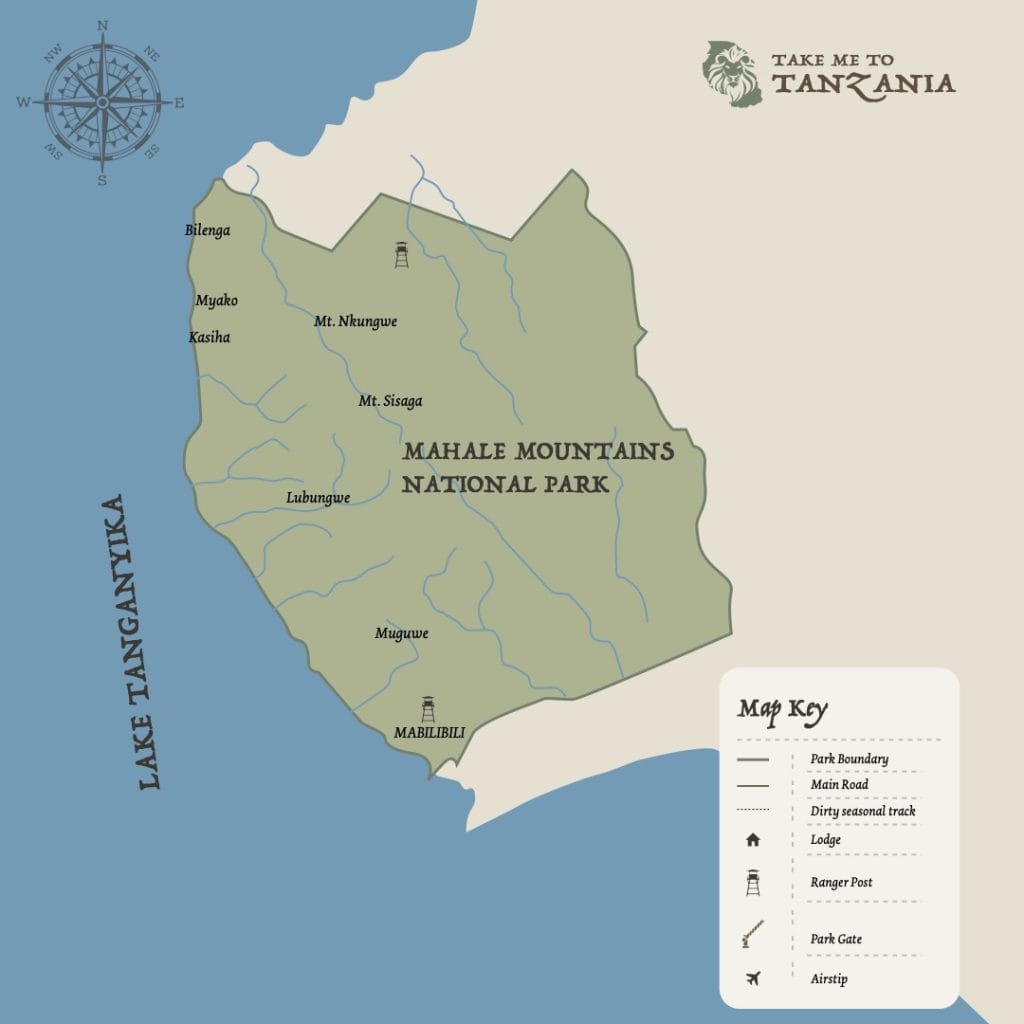
Tucked away on the eastern shores of Lake Tanganyika, the world’s longest and second-deepest freshwater lake, lies Mahale Mountains National Park—one of Tanzania’s most remote and breathtaking wildlife destinations. This park is world-renowned for hosting the largest population of wild chimpanzees in Africa and offering a uniquely intimate safari experience. With no roads inside the park, your adventure is purely on foot or by boat, making every moment feel like a true immersion into nature.
Established with a deep commitment to conservation, Mahale is not only a refuge for wildlife but also a hub of scientific research, inspired by early Japanese primatologists who studied chimpanzees here. The park sits at an elevation of 750 to 2,250 meters, and receives 1,500 to 2,500mm of rainfall annually, with two distinct rainy seasons: short rains from October to November and long rains from March to mid-May.
Park Attractions
Mahale offers more than just chimps—its mix of forest, beach, and mountain ecosystems provides a rich variety of sights and wildlife.
- Chimpanzees: See these intelligent primates up close, playing, grooming, and leaping between the trees.
- Lake Tanganyika: The crystal-clear lake offers serene beaches and unbeatable sunset views, ideal for swimming, snorkelling, or simply relaxing.
- Waterfalls & Rivers: Explore hidden gems like Ntale, Kasiha, and Sansa waterfalls nestled within the forest.
- Mahale Mountains: Hike scenic trails up to Kungwe Peak (2,462m) and enjoy panoramic views along the way.
- Sand Beaches: Soft, untouched beaches stretch along the lake’s shoreline—perfect for a peaceful retreat.
- Ujiji Historical Site: Visit nearby Ujiji, where Dr. Livingstone famously met Stanley in 1871. Learn about the area’s slave trade history and explore vibrant local markets.
When to Visit
Mahale is open year-round, but the experience varies with the seasons:
- Best Time for Chimp Trekking: Dry season (June to October)—easier hiking and better visibility in the forest.
- For Birdwatching & Plant Life: Wet season (March to May) offers lush vegetation and a boom in bird and insect activity.
Avoid: Travel may be more challenging during peak rains (March to mid-May), especially on dirt roads.
Excursion and Activities in Mahale Mountains National Park.
Whether you're a nature lover, adventurer, or history buff, Mahale Mountains offers something unforgettable:
- Chimpanzee Trekking: Follow expert guides deep into the forest to observe wild chimp families in their natural setting. Trek times vary but average 30 minutes to 3 hours.
- Mountain Hiking: Scale Kungwe Peak on a 7–9-hour round hike, spotting wildlife and taking in incredible views.
- Walking Safaris: Explore diverse ecosystems on guided walks to spot monkeys, birds, and even leopards or lions.
- Boat Cruises: Glide along Lake Tanganyika’s shores, spotting hippos, crocodiles, otters, and aquatic birds.
- Sport Fishing: Try your luck with a rod in Lake Tanganyika, known for its large and unique freshwater fish.
- Water Activities: Enjoy snorkeling, diving, kayaking, or a refreshing swim in the lake’s clear waters.
- Camping & Beach Fly-Camping: For the full wilderness experience, camp under the stars either inland or along the lake’s shores.
Getting there
Despite its remote charm, Mahale is reachable by several means:
- By Air: Charter flights with Coastal Aviation, Zantas Air, Safari Air Link, or Air Excel fly from Dar es Salaam, Arusha, or other major cities directly to the region.
- By Road: From Kigoma, it's a scenic 128 km (approx. 5-hour drive) southeast along the lakeshore to access points like Rukoma or Mgambo village.
- By Water: From Kigoma, take a 9–10-hour ferry ride across Lake Tanganyika to Lagosa Point, followed by a 30-minute boat transfer to the park. Local boats or park-arranged pickups are available.
OTHER DESTINATIONS
Serengeti National Park
Learn MorePrison Island
Learn MoreNgorongoro Conservation Area Authority
Learn MoreStone Town
Learn MoreMikumi National Park
Learn MoreChumbe Island Coral Park
Learn MoreMnemba Island
Learn MoreArusha City
Learn MoreDar es Salaam City
Learn MoreMount Longido
Learn More
